Kvasnička Aleš MSc.

Doctoral training
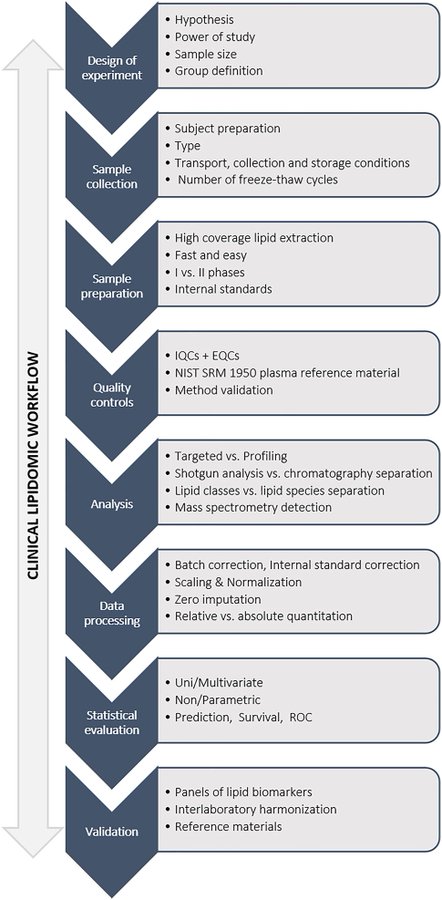
Clinical lipidomics
Master training
Lipidomic Analysis of Dry Blood Spots of Patients with Short-Chain Acyl-CoA Dehydrogenase Deficiency
Main focus of this diploma thesis is the analysis of the lipid composition of samples from patients with an inherited metabolic disorder caused by a short-chain acyl-CoA dehydrogenase deficiency. Two metabolomic approaches have been compared, namely targeted lipidomic analysis, which has been optimized to ensure compatibility with a different type of liquid chromatograph and mass spectrometer than the setup used in the originally published method. Furthermore, the samples have been subjected to non-targeted lipidomic analysis, which has been carried out during an Erasmus + traineeship at the Institute of Pharmaceutical Sciences at Eberhard Karls University in Tübingen, Germany. The nearly identical conclusions of the results of the targeted and non-targeted analysis, which has been performed with a time interval on another instrument in another country and using a new dry blood spot sample as well as a different extraction procedure, prove the reproducibility and validity of the performed analyses. In patients, systematic changes in the lipidome were observed in most lipid classes (LPC, LPE, PC, PC-O, SM, PE, CAR, FA). Compared to the control group, lipids with acyls chains with a length of 16 carbons (LPC, PC, LPE, PE) and lipids with arachidonyl group (PC) were increased in the group of patients, and lipids with reduced concentrations included lipids with acyl chains with a length of 18 carbons (LPC, PC, LPE, PE). These changes have been described in the literature in connection with the remodeling mechanisms of mitochondrial cardiolipin and also due to the metabolic switch (namely Warburg effect) caused by increased oxidative stress in the cell. In the non-targeted lipidomic analysis, some oxidized lipids have been further identified, however, their origin and role in the pathobiochemical mechanism of SCADD disease was not proven and the non-targeted lipidomic method would need to be modified accordingly.
About me
Aleš Kvasnička is a PhD candidate in Medicinal Chemistry and Clinical Biochemistry and works as an academic and research assistant at the Faculty of Medicine and Dentistry, Palacký University in Olomouc and Olomouc University Hospital in the Czech Republic. He obtained his Master's degree in Biochemistry from the Faculty of Science, Palacký University in Olomouc and won several prizes in the Dean and Rector competitions for the best student work. He is a core member of the Young Researchers and Innovators Committee of the EpilipidNET Cost Action and a core member of the Working Group: Promotion & Publications of the European Federation of Laboratory Medicine and Clinical Chemistry and member of the Early-career Members Network (EMN) Committee of the Metabolomics Socitety. His research focuses on clinical lipidomics - the application of lipidomics to understand the pathobiochemistry of diseases, their progression, diagnosis and patient stratification. During his studies, he completed several internships as a visiting researcher in Germany (Michael Lämmerhofer's lab), Japan (Hiroshi Tsugawa's lab) and Norway (Jens Pahnke's lab).
Journals